
JDE SUNSETTING: YOU BUILD THE FUTURE. WE RING-FENCE THE PAST.
JDE sunsetting refers to the process of transitioning away from Oracle's JD Edwards EnterpriseOne platform. Oracle has extended Premier Support through December 2037, but organizations face a structural capacity challenge: the teams responsible for running JDE are the same teams expected to plan and execute a platform migration.
Stop sacrificing your ERP migration roadmap to legacy maintenance. We assume 100% of JDE production support to structurally liberate your core team for the new build.
THE SUNSETTING TIMELINE IS NOT YOUR BIGGEST RISK
Oracle has extended JDE EnterpriseOne Premier Support through December 2037. That timeline gives you room. What doesn't give you room is the math.
Your JDE operations team is already spending 35–45% of its capacity on unplanned, reactive work — password resets, CNC administration, patch management, vendor escalations, production incidents. This is the Capacity Tax, and it's structural. It doesn't go away when you start planning a migration. It gets worse.
Every hour your team spends evaluating SAP, Oracle Fusion, or NetSuite is an hour pulled from an operations queue that was already overflowing. The migration doesn't create new capacity. It competes for the capacity you don't have.
THE CAPACITY TRAP IN JDE ENVIRONMENTS
MONTH 1–3
Leadership announces the migration evaluation. Your senior JDE architects — the same people keeping production running — are now expected to attend vendor demos, map business processes, and evaluate platforms. Their operational queue doesn't shrink. It just goes unattended longer.
MONTH 4–8
Ticket aging increases. Resolution velocity degrades. The backlog compounds. Junior staff escalate more because the senior people are in migration workshops. Workarounds replace root-cause fixes. Technical debt accumulates.
MONTH 9–12
The migration timeline slips. Not because the new platform is complex — because the team running the old platform is drowning. The people who were supposed to be planning the future are still fighting fires from the past.
This pattern repeated across every JDE environment we've measured. The migration doesn't fail because of technology. It fails because of capacity.
BIFURCATED EXECUTION: SEPARATE THE RUN FROM THE BUILD
The organizations that navigate JDE transitions successfully share one structural decision: they stop asking the same people to do both jobs.
THE RUN
A dedicated operations team assumes full custody of JDE production support. Service desk, CNC/Basis administration, batch processing, environment management, vendor escalations.
We embed inside your operation as an extension of your team — not outsourcers, not contractors.
THE BUILD
Your senior JDE architects are permanently removed from the reactive queue. They focus exclusively on platform evaluation, business process mapping, data migration planning, and transition execution.
Their calendars are protected. Their capacity is recovered.
STRUCTURAL COMPARISON
BEFORE
One team → Operations (40%) + Strategic (60%) = constant firefighting. Senior architects split between reactive tickets and roadmap work. Neither gets full attention.
AFTER
Team A → 100% Operations (Allari) | Team B → 100% Strategic (Your people). Clean separation. No context-switching. No firefighting bleed.
The 90-Day Structured Ramp
Knowledge Transfer
We learn your environment through forensic time tracking — every process, every tribal procedure, every undocumented workaround.
Gradual Assumption
We take increasing ownership of the reactive queue while your team validates our work.
Full Operational Custody
Your team is free. The reactive ratio on their side drops below 10%.
MEASURED ACROSS JDE ENVIRONMENTS
W.L. Gore & Associates
- 45 countries, 3,500 users, 25 FTEs
- JDE operations fully assumed during SAP S/4HANA evaluation
- 30–40% capacity recovered for the migration team
- 100% production uptime maintained throughout
Channellock
- JDE 9.2 → NetSuite bridge
- 275 hours recovered annually through automation
- 82% ticket aging reduction
- Zero production disruptions during transition
UNDERSTANDING THE ORACLE SUPPORT LANDSCAPE
- JDE EnterpriseOne 9.2: Premier Support through December 2037
- JDE World A9.4: Moved to Sustaining Support as of April 2025 — no new fixes, no new tax/regulatory updates
- Oracle has progressively extended the timeline (2025 → 2028 → 2031 → 2033 → 2037)
- March 2026 layoffs (30,000 positions) raise questions about Oracle's long-term JDE investment
The timeline gives you room. The question isn't when to migrate. The question is whether your team has the capacity to plan the migration while keeping the lights on.
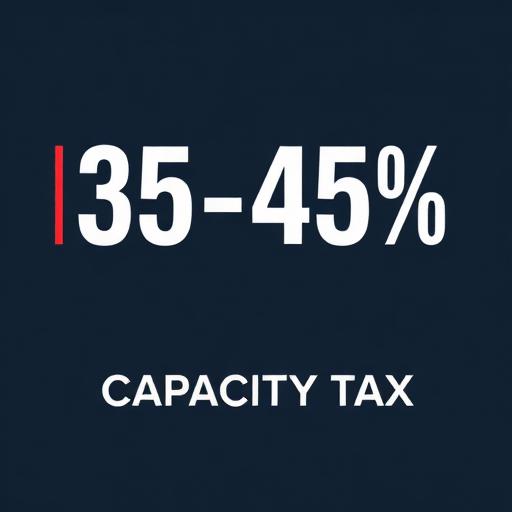
The data behind the 35–45% Capacity Tax — and the structural interventions that recover it.
The State of IT Capacity: 2026 Benchmark Report
35–45% of enterprise IT labor capacity is consumed by unplanned, reactive work. 27 years of forensic data across 62 Fortune 500 environments.
YOUR JDE TEAM IS ALREADY OVER CAPACITY. WE RECOVER IT.
The first step is measurement. The Executive Diagnostic quantifies exactly how much of your team's capacity is consumed by reactive operations — before you make any platform decisions.
A 45-minute structured review of your environment's capacity allocation. Not a sales conversation. We bring the benchmark data. You bring the questions.
62 Fortune 500 engagements · 27 years of continuous operation · 11 countries
JDE Sunsetting: Frequently Asked Questions
ALIGNED TO VISIBLE OPS BENCHMARKS · EST. 1999 · ITIL CERTIFIED