A JDE release is more than a package deployment

What changed: Allari coordinated package deployment, service tests, processing checks and release closure.

The pressure: a change has to work across the operation

A production package is one part of a release. The delivery manager also needs the scheduler, application services and interfaces to stop and restart in the right sequence. Different teams may own different steps. A successful build does not, by itself, show that transactions can move through the operation again. In this anonymous customer example, the useful evidence is the connection between those responsibilities: a shared deployment checklist records preparation, technical delivery, testing, processing checks and closure. It makes the work inspectable beyond a simple “deployed” status.

Coordinate the work before the outage

The checklist records completed preparation to create the change, identify requested work, confirm competing data-center activities and review additional outage requirements. Build tasks carry separate completion initials from the deployment tasks. They include readiness checks, building the package and reviewing build logs. This matters because the people arranging the window, preparing the package and carrying out the outage do not have identical responsibilities. A common sequence gives them a place to record what is ready and what must happen next. The separate preparation and execution entries make responsibility visible before the outage begins.

Control the transition into deployment

The shutdown sequence covered processing queues, subsystem jobs, user notifications and confirmation that interfaces were down. Scheduler shutdown and restart were coordinated with package deployment to application and business-service servers. Clear handoffs connected the teams stopping surrounding processes with those deploying and restarting the application.

Check the services and the processing

The completed entries go beyond package deployment. They include business-service tests, application bench tests, checking scheduler connections, releasing queues and reviewing successful job completion. The bench-test instructions cover practical application behavior such as login, navigation, record retrieval, running a batch and viewing its output. The checklist also records notification to the interface team once prerequisite services and job processing have been checked. That notification gave the interface team a clear point from which to resume its work.

One coordinated release, from preparation to handback

The team completed the build, production deployment, service tests, processing checks and change closure in a shared release sequence. The checklist made ownership and handoffs visible across the teams preparing the change, executing the outage and returning processing to the operation.

Repeatable steps, with people at the decision points

Repeatable shutdown and startup activities used existing automated group jobs. People checked connection state and job results before proceeding. Automation handled repeatable steps while specialists retained the decision points, validation and recovery responsibilities.

Apply the same discipline to your next change

Start with the business service that must be available after the change. Agree the window, dependencies, owners, validation and recovery approach together. Allari brings the required specialists together with a dedicated Client Solutions Manager at no additional charge to coordinate priorities, scope and your approved budget. After the release, use the shared record to improve repeated steps and strengthen procedures for exceptions.

Make the next release easier to coordinate.

Bring the change, the teams involved and the window you need to protect. Together, we’ll define responsibilities, spending limits and the checks needed before handing processing back.
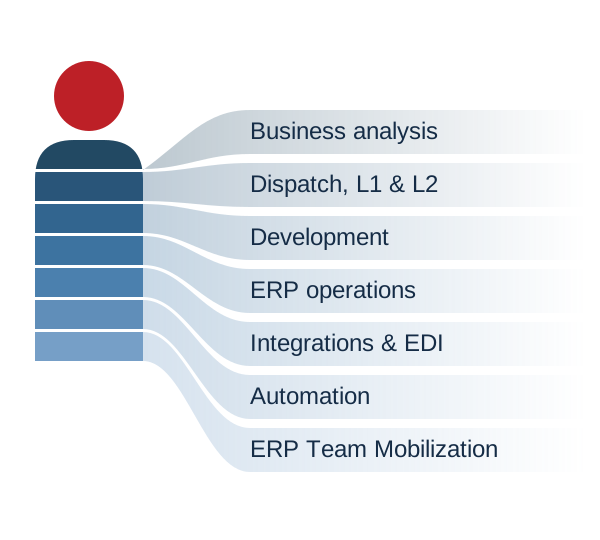
Coordinated expertise across business analysis, support, development, ERP operations, integrations, automation and ERP team mobilization.

Allari at Work

Your IT team.
Backed by an entire delivery organization.

Functional and technical specialists, coordinated around your priorities.

Discuss your next priority →